
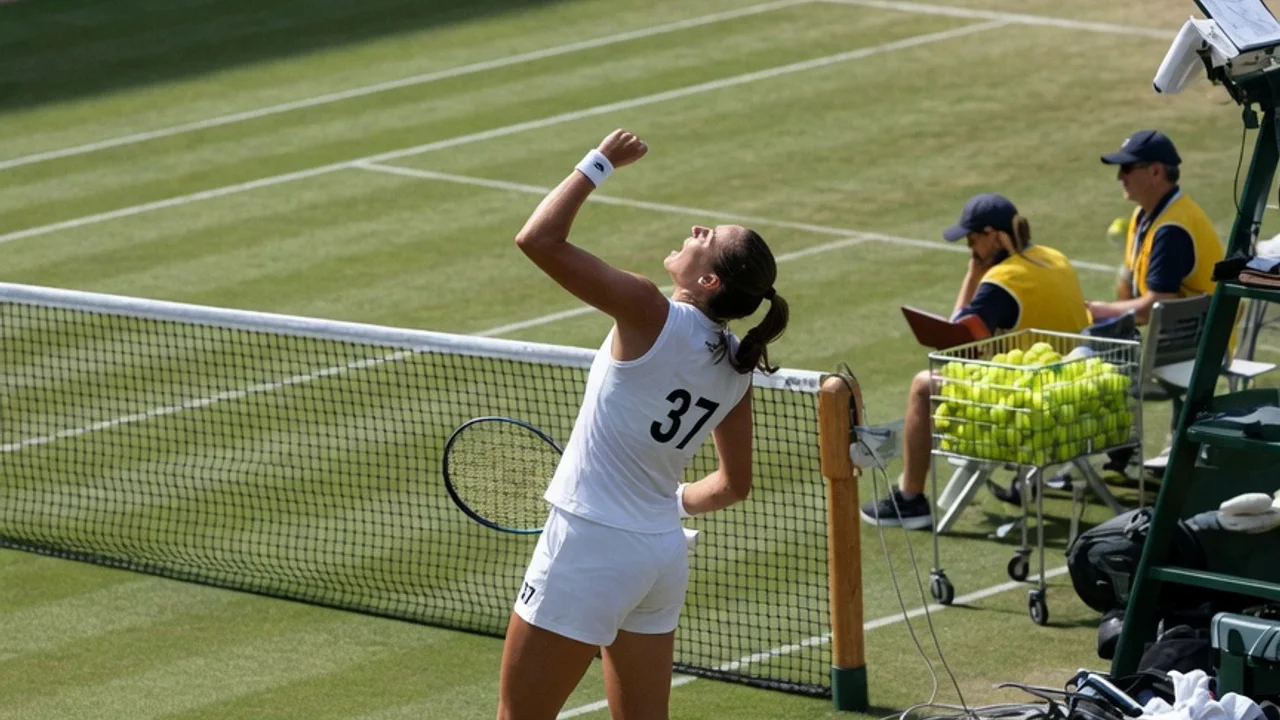
Coco Gauff’s clinical fourth-round win at Flushing Meadows completed a US Open quarterfinal lineup featuring all top six seeds for the first time since 1998. Her ability to turn elite metrics into scoreboard pressure has helped form one of the most formidable last eights in tournament history.
Gauff’s 6-1, 6-4 win over Iva Jovic stood out for its efficiency. She won 58 percent of points on her opponent’s first serve and 56 percent of all return points, a figure rarely seen in matches between top-20 players. Gauff broke serve five times and forced Jovic into 30 unforced errors while committing just 15 herself. Former world No. 5 Daniela Hantuchova described the current women’s field as “in such a healthy, strong position,” adding that on these numbers, “anyone can take it from here.”
After an early break, Gauff won six consecutive games and 13 of the final 15 points to close the opening set in 33 minutes. Jovic, already ranked inside the top 20 and coming off a three-hour epic in the previous round, fought off four break points in the second set. Gauff’s baseline consistency and depth, however, repeatedly pushed the teenager into defensive patterns she could not escape.
Gauff’s Streaks and Statistical Context Redefine the Quarterfinal Narrative
Gauff has won 10 straight matches and 45 this season, without losing a set across her last 20 played. At age 22, she has reached her 12th Grand Slam quarterfinal, a feat matched only by Serena Williams and Maria Sharapova before 23 in this century, while equaling Kim Clijsters. Her record against American opposition in majors now stands at seven consecutive wins, with her last defeat coming against Emma Navarro, another member of this year’s quarterfinal lineup.
The US Open women’s quarterfinals are loaded with pedigree and form. Five Grand Slam champions populate the last eight, including Gauff, Aryna Sabalenka, Elena Rybakina, Jessica Pegula, and reigning Olympic gold medalist Zheng Qinwen. Rybakina, who dispatched Naomi Osaka in straight sets, is closing in on the world number one ranking and could reshape the standings depending on the quarterfinal outcomes.
The field’s statistical parity is underscored by the following table:
| Seed | Player | Grand Slam Titles | 2026 US Open Sets Lost | Current Streak |
|---|---|---|---|---|
| 1 | Aryna Sabalenka | 2 | 1 | 8 wins |
| 2 | Elena Rybakina | 1 | 2 | 7 wins |
| 3 | Jessica Pegula | 0 | 1 | 6 wins |
| 4 | Coco Gauff | 1 | 0 | 10 wins, 20 sets |
| 5 | Mirra Andreeva | 0 | 3 | 5 wins |
| 6 | Linda Noskova | 0 | 2 | 6 wins |
| Q | Zheng Qinwen | 1 (Olympics) | 4 | 7 wins |
| 26 | Emma Navarro | 0 | 3 | 5 wins |
All top six seeds reaching the quarterfinals recalls earlier periods of dominance and depth. The alignment also changes the tactical demands on those still standing. Gauff’s route to a second US Open title and potentially the world number one ranking runs through Mirra Andreeva, whose shot tolerance and defensive skill can extend rallies and test Gauff’s attacking patterns.
The men’s draw has produced its own statistical markers: Alexander Zverev is the only player to reach the quarterfinals at all four majors this year, while Alexander Blockx made Belgian history by reaching his first US Open quarterfinal. Their runs invite the same scrutiny of probability and form found in tournament probabilities and form breakdowns in high-stakes tennis matchups.
For Gauff, the key measure is her pressure on return and her conversion rate on break points. She converted 5 of 8 opportunities against Jovic, a 62.5 percent success rate. That return-game efficiency will face a sharper test against Andreeva.