
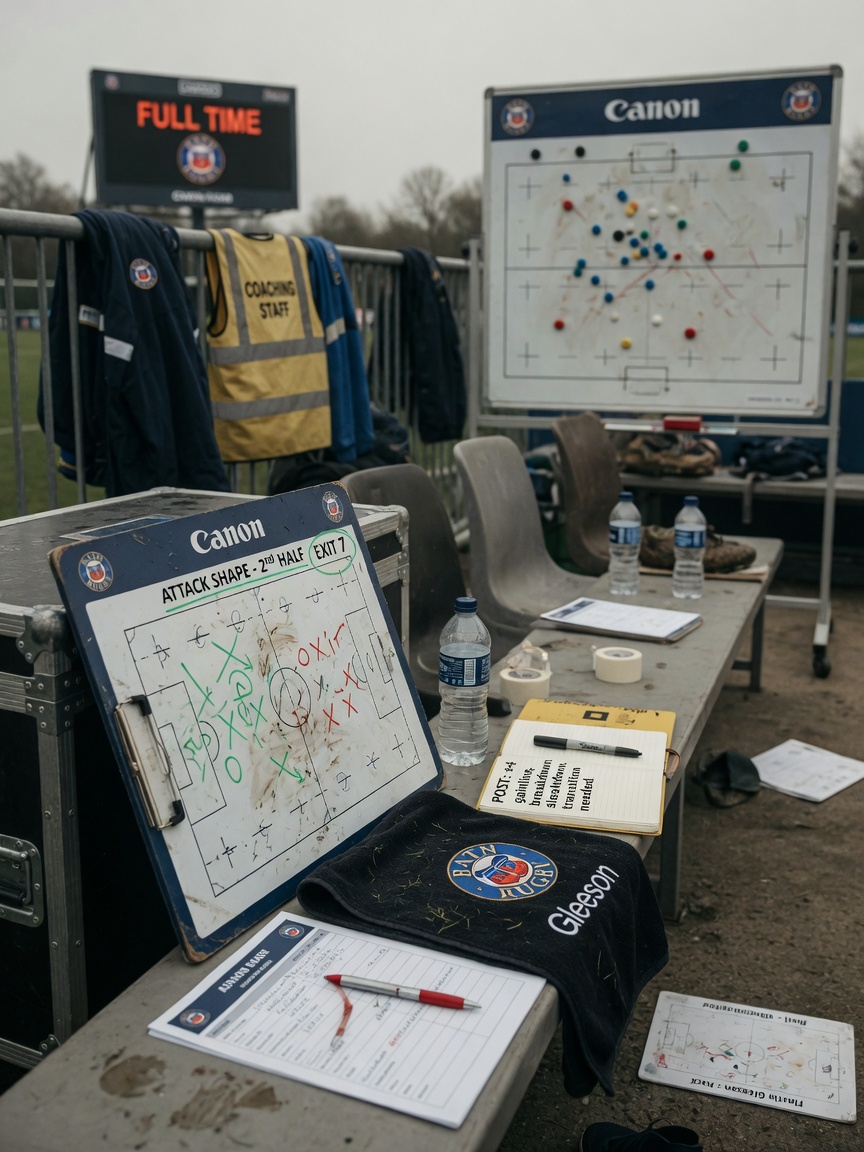
Bath fans were left stunned by the abrupt departure of attack coach Martin Gleeson, just eight months after his arrival. Disbelief, gratitude, and anxious speculation have flooded the stands and social media, as supporters try to make sense of what this means for a side that finally rediscovered its attacking spark.
Timing couldn’t be worse for many. Bath’s attack has been a revelation, finishing second in the Premiership and boasting the third-highest tally for tries and points. “We’ve been electric at times,” one long-time fan posted. “Gleeson had a clear hand in that. Why change now when we’re so close?”
Momentum had been building. Gleeson, a former England and Great Britain rugby league centre with two Super League titles, arrived after Lee Blackett’s move to the national setup. Fans have thanked him for his influence, echoing his own parting words: “It’s been a great season and I wish the club all the success in the future.” Still, frustration bubbles beneath the surface.
Stability is once again under the microscope. Bath are now searching for their fourth attack coach since Johann van Graan took over as head of rugby in July 2022. “How are the players supposed to build any attacking identity if we change coaches every year?” a supporter asked on a local radio call-in, voice cracking. Joe Maddock. Lee Blackett, and now Gleeson have all cycled through the role. The uncertainty is wearing thin.
Supporters Debate: Progress or Instability?

Some loyalists point to Bath’s attacking numbers as proof the system works, regardless of who’s in charge. “Look at the numbers,” one wrote, referencing the 75 tries and 563 points this season. “We just need someone to continue what’s been started.” Others fear the revolving door will cost Bath in the long run, especially after the heartbreak of missing out on the Premiership final following a play-off defeat to Exeter.
Arguments spill out of the stadium and into the pubs. What makes Bath. Bath? Is it the coach, the players, or the culture? For many. Gleeson’s exit is more than a staffing change. It’s a question of identity. “We’re not a stepping stone, we’re not just a line on a CV,” one supporter insisted outside the Rec.
Names are already being tossed around as possible replacements, but consensus is elusive. Some want a steady hand to anchor Bath’s attacking philosophy for the long haul. Others crave fresh ideas to unlock the squad’s obvious firepower.
Uncertainty lingers. Supporters are calling for the club’s leadership to provide clarity and reassurance. Other clubs have reaped the rewards of continuity in their coaching ranks. Bath’s churn at attack coach is starting to feel like an unwanted tradition, and the anxiety is growing.
Comparisons to other sports are creeping in, as fans debate whether Bath should embrace new technologies and analytics to shape tactics and squad selection. Some see inspiration in the way fresh perspectives and cutting-edge analytics and decision-making have given teams an edge elsewhere. For those following the evolution of coaching and tactical analysis, these innovations are both an opportunity and a risk.
One thing remains: Bath’s support is as passionate as ever. Every change, every departure, cuts deep. The search for a new attack coach now carries the weight of expectation from a fan base desperate for silverware, weary of transition, and fiercely protective of their club’s identity.
Gleeson’s exit leaves Bath with more questions than answers. The search for stability continues, overshadowing a season that had promised so much.