
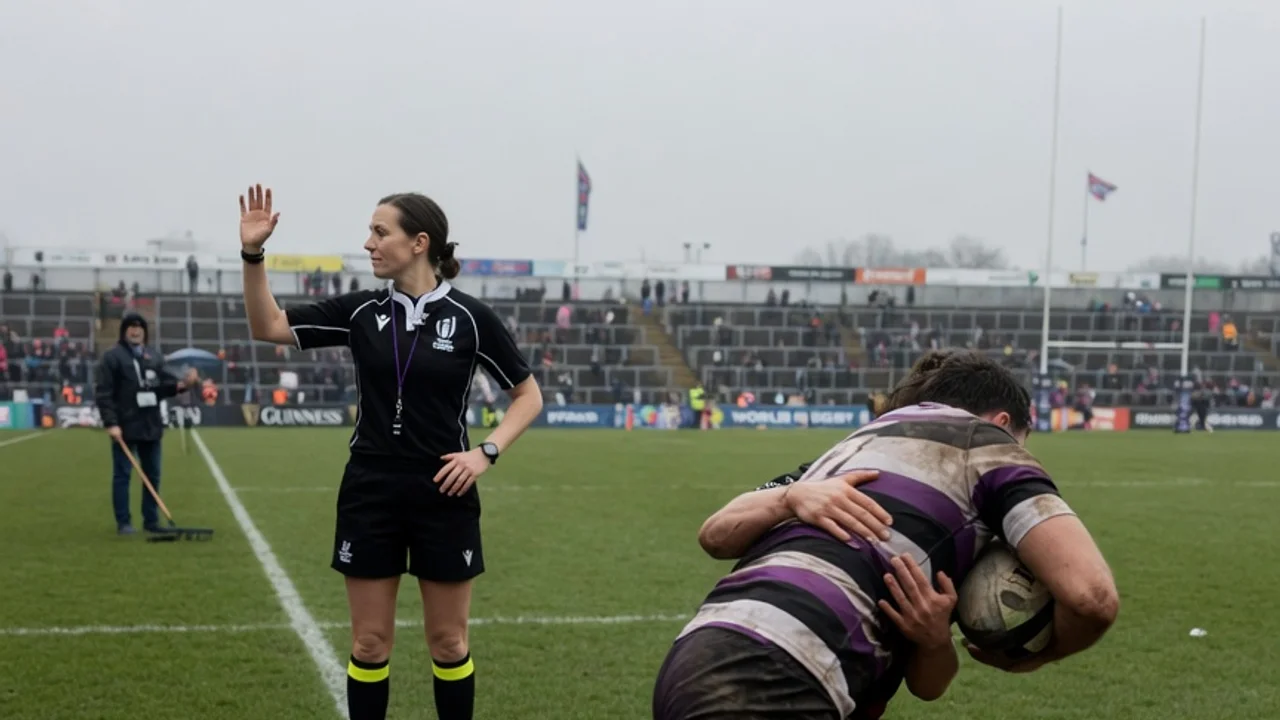
Fifty-two international Tests. That’s the mark Aimee Barrett-Theron leaves behind as she steps away, the most-capped female international rugby referee on record. Her sudden stand-down, prompted by a breast cancer diagnosis, doesn’t just pause a remarkable career, it exposes uncomfortable truths about how rugby cares for its referees when the spotlight fades.
Barrett-Theron, 39, revealed her diagnosis in a statement, explaining she discovered the cancer during a "self-check." She described the disease as treatable and voiced confidence in her medical team, hoping to return "in a few months’ time." Even at the pinnacle of her profession. Barrett-Theron detected the warning signs herself, not through any formal rugby health screening. Are elite referees, who crisscross continents and tournaments, really being looked after as closely as the players they oversee?
Her most recent match. South Africa A versus Zimbabwe, took place just last month. No one watching would have guessed anything was wrong. The abruptness of her announcement hints at an early-stage diagnosis, but also at a lack of routine health oversight for top officials. Rugby expects its referees to meet demanding fitness and availability standards, yet the support structures remain largely invisible until a crisis erupts.

Barrett-Theron’s 52-Test tally is more than a statistic. It’s a testament to years spent navigating rugby’s entrenched hierarchies, culminating in her appointment to the Women’s Rugby World Cup final between England and Canada at Allianz Stadium last year. She’s also become a cult figure for her candor, memorably telling England’s Henry Pollock and the Wales squad, "I’m not mad. I’m just really disappointed," during the Under-20 Six Nations. Authority and relatability, her trademarks, have made her indispensable.
Now, rugby’s governing bodies face a reckoning. Mark Alexander, president of the South African Rugby Union, quickly praised Barrett-Theron’s resilience and trailblazing career, noting she has overcome "many, many barriers" to reach this level. Yet his statement offered no details about support systems or contingency plans for referees facing illness. Applause for a referee’s grit is easy. Ensuring that grit isn’t exploited is another matter.
The numbers tell their own story. Barrett-Theron’s 52 Tests, her work in the United Rugby Championship, and her presence in the sport’s biggest women’s matches represent a depth of experience that’s now missing. With so few elite female referees in the pipeline, her absence isn’t just a gap, it’s a warning sign. No word yet on who will step in for upcoming fixtures, or how assignments will be reshuffled.
| Referee | Tests Officiated | Recent Major Assignment | Current Status |
|---|---|---|---|
| Aimee Barrett-Theron | 52 | Women’s World Cup Final (2025) | Stood down, ill |
Support from the rugby community has poured in, but institutional soul-searching is harder to spot. Barrett-Theron’s own advice, "Check yourself, listen to your body, and don’t delay getting anything unusual looked at", puts the burden squarely on individuals. Even at the highest level, self-diagnosis remains the first line of defense.
Will Barrett-Theron’s experience spark a change in how rugby protects its officials? Will regular medical checks become standard, or will referees continue to rely on their own vigilance? The sport’s appetite for scrutiny and accountability on the pitch rarely extends behind closed doors.
Barrett-Theron promises she’ll be back. But the silence around structural support for referees is deafening. Her absence is more than a personal fight, it’s a challenge to rugby’s duty of care for those who enforce its rules.